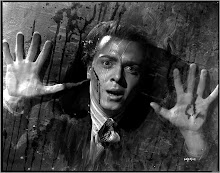
When the book was first published in America, the publishers did not like the last chapter, complaining that it was unrealistic, that it was unbelievable that someone might reform in the way that Alex seems to do. The US editor claimed the last chapter was 'bland'. Burgess said that he went along with this as he needed the money. More importantly, Stanley Kubrick, the director of the (in)famous film, only knew of the US version, so the film does not have the 21st chapter. Kubrick later said he preferred the darker view of humanity that the doctored version presented.
So, two versions of the book existed; two versions that clearly contrasted. One ends with Alex proclaiming ironically that he was 'cured'. The conditioning had been reversed by the doctors while he was unconscious and the reader might imagine him setting off on another rampage, heading off for some more 'ultra-violence' and bit of the old 'twenty-to-one'. He is unregenerate, unrepentant, seemingly evil to the core. The other showed the possibility that Alex would grow up and settle down. Chapter 21 (the traditional age of entering adulthood) sets up the expectation that Alex would become fed up with random acts of violence as he starts becoming interested in 'normal' things: money, 'seeking a mate', and little fat babies. Could Alex reach a point of maturity and find redemption by himself? Left to his own devices could he choose to do 'good'?
In the real final chapter your humble narrator states his belief that youths are like animals or little wind-up toys. They have no real sense of moral responsibility. Their actions are instinctive and inherently selfish and yet to deprive them of the right to choose to do harm would be to turn them into automatons. Many readers, it seems, consider this to be Burgess's standpoint, but we must also keep in mind the fact that these opinions are expressed by the little psychopath himself, the unreliable narrator who has proved to be entertainingly eloquent but totally solipsistic and certainly not a character to take at face value.
Now, write an argument for or against cutting the final chapter. Write 200 words for and 200 against.